
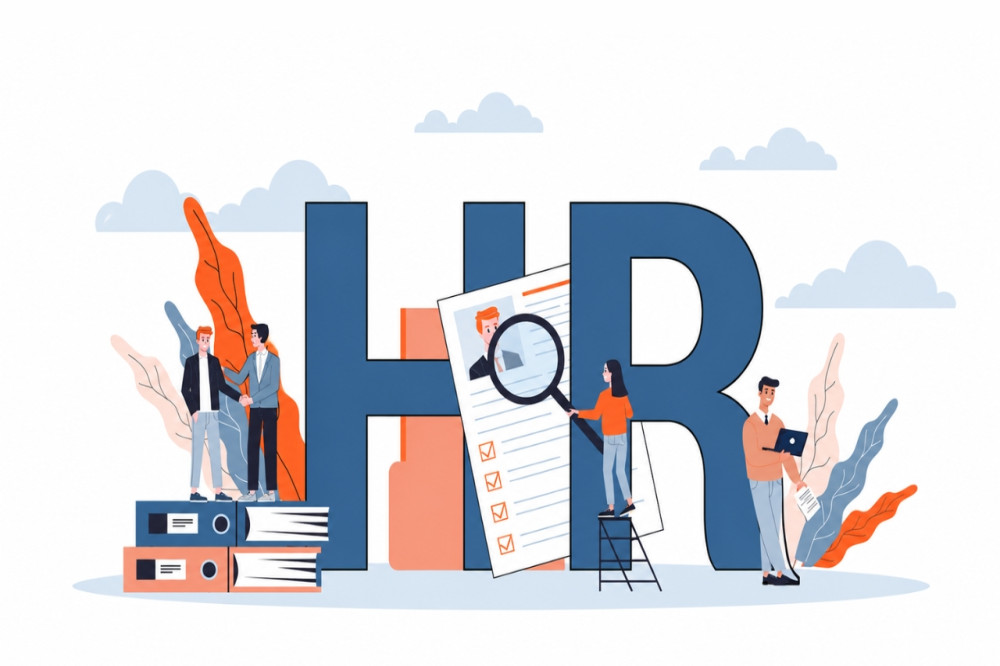
When students hear “Human Resources,” many imagine paperwork, payroll, or hiring interviews. Parents often think of HR as a safe, stable corporate role but not a “core” career like engineering, medicine, or finance. Both impressions are incomplete.
In reality, Human Resources sits at the intersection of people, business, and strategy. As Indian workplaces grow more complex—driven by IT services, startups, healthcare, manufacturing, and global teams—the role of HR has evolved far beyond administration. Today, HR professionals influence how companies hire, retain talent, manage performance, resolve conflicts, and build healthy work cultures.
If your child is curious about people, communication, organisational behaviour, and business—but not necessarily inclined towards highly technical or exam-heavy careers—HR can be a meaningful and rewarding option. The key is understanding what the field truly involves before choosing it.
Human Resources is the function within an organisation that manages the entire employee lifecycle—from hiring to exit. But more importantly, HR ensures that people and business goals move in the same direction.
In practical terms, HR teams are responsible for recruiting the right talent, onboarding employees, designing training programmes, managing performance appraisals, ensuring fair compensation, and maintaining compliance with labour laws. They also handle employee engagement, workplace policies, grievance redressal, and organisational culture.
In India, this role has become especially critical. Sectors such as IT, healthcare, e-commerce, logistics, and education are expanding rapidly, and competition for skilled talent is intense. Companies can no longer afford poor hiring decisions or disengaged employees. HR acts as the bridge between management expectations and employee well-being.
Modern HR is not just about “handling people problems.” It is about enabling people to perform at their best while ensuring the organisation remains productive, compliant, and future-ready.
One of the strengths of HR as a career is its accessibility. Students from any stream—commerce, arts, or science—can enter the field, provided they are interested in people management and business environments.
After Class 12, many students opt for undergraduate programmes such as BBA with HR specialisation, B.Com in Human Resources, or BA in Psychology or Sociology, which form a strong foundation for HR roles. These courses typically last three years and focus on basic management principles, organisational behaviour, labour laws, and communication skills.
Some students also pursue diploma or certificate courses in HR management, which range from six months to two years. While these can help with entry-level roles, they are usually more effective when combined with a full degree.
At the postgraduate level, an MBA or PGDM in Human Resources remains the most recognised qualification for career growth. Institutes such as XLRI, TISS, and several reputed universities across India offer specialised HR programmes. Alongside Indian degrees, international certifications like PHR or SPHR can add value later in one’s career, especially for global roles.
What matters most is not just the qualification, but how well a student understands workplace dynamics, people behaviour, and business realities.
HR is not a single job—it is a collection of roles that evolve as professionals gain experience.
Early-career HR professionals often start as HR executives or coordinators. At this stage, the work is operational and process-driven. They assist with recruitment, schedule interviews, manage onboarding paperwork, coordinate training sessions, and support payroll or attendance systems. While this phase may seem administrative, it builds essential discipline and organisational skills.
As professionals grow, they move into broader roles such as HR generalists or specialists. Here, they handle performance appraisals, employee engagement initiatives, conflict resolution, and policy implementation. They begin interacting closely with managers and employees, learning how decisions affect morale, productivity, and retention.
At senior levels, roles such as HR Manager, HR Business Partner, or Director involve strategic thinking. Professionals here align HR practices with business goals, design leadership development programmes, manage large workforces, and advise leadership on organisational change. At the top, Chief Human Resource Officers (CHROs) help shape company culture and long-term talent strategy.
This progression typically takes 10 to 20 years and demands continuous learning, adaptability, and emotional intelligence.
HR is ideal for individuals who are naturally empathetic but also practical. It requires the ability to listen without bias, communicate clearly, and make fair decisions—even in emotionally charged situations.
Students who enjoy subjects like psychology, sociology, communication, and management often find HR intellectually satisfying. Curiosity about human behaviour, conflict resolution, and motivation is a strong indicator of suitability.
At the same time, HR is not just about being “good with people.” Professionals must handle data, compliance requirements, policies, and sometimes tough decisions like performance management or layoffs. Emotional maturity and resilience are essential.
Parents often ask whether HR is a “safe” career. The answer depends on the student’s personality. For those who dislike rigid technical roles but thrive in interactive environments, HR can offer long-term stability and growth—especially in India’s expanding corporate ecosystem.
India’s HR job market is growing steadily, driven by urbanisation, startups, global outsourcing, and evolving labour laws. Cities like Bengaluru, Hyderabad, Pune, Gurugram, and Mumbai continue to see strong demand for HR professionals, particularly in IT and services.
Fresh graduates typically start with salaries ranging from ₹2.5 to ₹4.5 lakh per annum. With 5–8 years of experience, professionals can earn between ₹6 and ₹12 lakh annually, depending on industry and location. Senior roles, especially in large organisations or consulting firms, can command ₹15–30 lakh per annum or more.
Salary growth in HR is closely tied to skills, not just tenure. Professionals who develop expertise in talent analytics, employee experience, compliance, or leadership development tend to progress faster.
Modern HR is increasingly data-driven. Tools powered by AI are now used for recruitment screening, performance analysis, and employee engagement surveys. Far from replacing HR professionals, technology is pushing them towards more strategic roles.
Understanding data, interpreting employee metrics, and aligning insights with human judgment is becoming a key differentiator. Students entering HR today must be comfortable learning new tools while retaining the human sensitivity that defines the profession.
Human Resources is not a fallback option—it is a people-centric, responsibility-heavy profession that shapes organisational culture and careers. When chosen consciously, it can be deeply fulfilling.
At Career Map, students and parents across Odisha are encouraged to look beyond job titles and examine aptitude, temperament, and long-term goals before choosing management careers like HR. With structured guidance, psychometric assessment, and realistic career counselling, students can identify whether HR aligns with who they are—not just what sounds secure.
Because the right career choice is not about trends.
It’s about fit, growth, and purpose.
Bibliography:
https://empuls.xoxoday.com/glossary/human-resources
https://www.krmangalam.edu.in/blog/hr-courses-after-12th/
https://www.keka.com/hr-roles-and-responsibilities
https://builtin.com/learn/tech-dictionary/human-resources





Hello !!
I'm a Career Bee