

Cinema is not just lights and camera — it is emotion, rhythm, silence, chaos and meaning stitched into frames. Filmmaking in India today is no longer restricted to the dream-run of Bollywood stardom. It is a craft, a discipline, a lifelong love affair with stories. With OTT platforms booming, YouTube evolving into a parallel industry, and regional cinema expanding its horizons, filmmaking has become one of the most thrilling creative careers for young storytellers.
If you’ve ever watched a scene and felt goosebumps…
If you pause films to analyse the lighting…
If stories keep you awake at night…
Then this guide is your storyboard — a complete, practical roadmap to turning passion into profession. Let’s roll the camera.
Scene 1 — Career Possibilities Await.
India does not just watch cinema — we breathe it.
But today, cinema is not only theatre releases and star-driven blockbusters. The content universe has expanded into dozens of storytelling formats:
A decade ago, filmmaking demanded big budgets and heavyweight contacts. Today? A student with a DSLR or even a smartphone can shoot a story that reaches audiences worldwide. Talent has become the currency — not access.
For students in Odisha and across India, this is the moment.
If you enter now with skill and clarity, you can build a career that grows for years.
A film set is like an orchestra. Every department contributes, every role matters. Here’s how this world functions — with nuances, reality, responsibility, and magic.
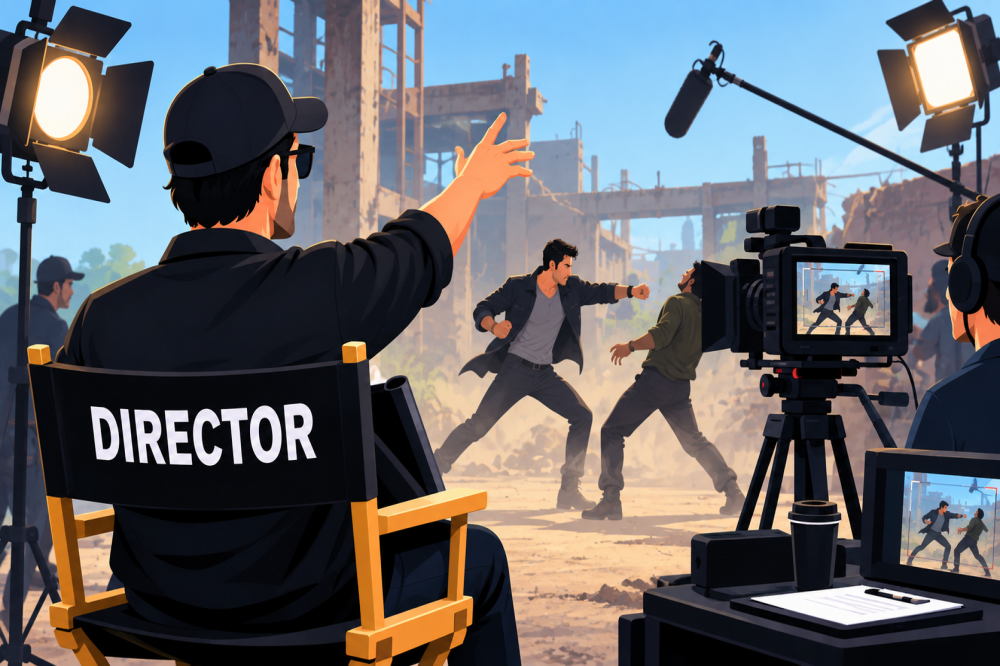
1. Direction
The director is the storyteller, the emotional engine. They visualise scenes, guide actors, control mood and pacing, make decisions when chaos hits, and ultimately carry the film from script to screen.
A director needs empathy, clarity, and courage — because filmmaking is creativity under pressure.
2. Screenwriting
Before camera rolls, before actors rehearse — there is the script.
The writer creates worlds, builds characters, plants conflict, writes dialogues that stay with us for years. Screenwriting requires observation, patience, rewriting, and vulnerability. It is lonely work, but it is where cinema is born.
3. Cinematography
If direction is vision, cinematography is the eye.
The cinematographer paints with light, shapes shadows, chooses lenses, frames emotions, and turns ordinary spaces into cinematic experiences. They work with light technicians, grips, gaffers — it’s both technical and poetic.
4. Editing
In the editing room, stories come alive.
A film is rewritten in the edit — shot by shot, second by second. Editors decide rhythm, emotion, tension, silence. They collaborate with sound designers, colorists, VFX artists, and assemble chaos into coherence.
5. Sound Design
Close your eyes — cinema still exists.
Sound designers build atmosphere: footsteps, rainfall, distant train whistles, heartbeats, silence. They mix dialogue, ambience, score and effects to create immersion. Sound is not background — it is emotion.
6. Production & Line Management
Films are dreams, but production is logistics.
Budgets, schedules, equipment, permissions, call sheets — production managers keep the machine running. They solve problems nobody prepared for — weather, location issues, last-minute crises. Without production, no film survives.
7. Art Direction & Production Design
Every colour on screen is chosen.
Set texture, props, walls, costumes, furniture, graffiti, even rust patterns — this department constructs the visual universe. Art directors collaborate with cinematography to give films personality.
8. Animation & VFX
Dragons, sci-fi cities, fantasy worlds — VFX builds what reality cannot.
3D artists, compositors, animators, matte painters are in huge demand across films, gaming, AR/VR, and OTT.
Filmmaking has a place for every mind — logical, artistic, introverted, extroverted.
This industry needs storytellers, organisers, technicians, dreamers.
Step 1: Study Stories — Not Just Films
Observe how scenes build tension. Why does silence feel heavier than dialogue? Why does one shot stay with you forever?
Learn the language of cinema.
Step 2: Make Short Films
Don’t wait for perfection.
Shoot with your phone. Fail fast, improve fast. Your first short film is practice — your fifth will be hauntingly better.
Step 3: Join a Film School or Workshop
Structured training gives you:
Exposure builds confidence — and confidence gets you sets.
Step 4: Start as an Assistant
Real learning begins on sets.
Be an AD, camera intern, sound assistant, editor’s apprentice. Watch how chaos becomes cinema.
Step 5: Build a Showreel
Your reel is your identity.
Keep it crisp, emotional, technically sound.
Step 6: Network Like a Filmmaker
Your next project may come from a coffee-table conversation. Be present. Attend screenings, festivals, workshops.
1. FTII, Pune — The Mecca of Indian Cinema Education
Direction, cinematography, acting, editing — legendary alumni, rigorous training.
2. SRFTI, Kolkata — Craft, Depth & Discipline
Strong technical departments, National Award–winning filmmakers, respected globally.
3. Whistling Woods International, Mumbai
Industry-connected, equipped with modern studios, excellent commercial exposure.
Other Worthy Choices:
Beginnings are humble — growth is exponential.
Observe how each film breathes differently.
Choose filmmaking if you:
If this is you — cinema might be your home.
Build It With Career Map.
If you dream of FTII or SRFTI… If you want clarity between cinematography vs editing vs direction… If you need a roadmap, portfolio guidance, institute preparation — Career Map, Odisha’s No. 1 Career Counselling Organisation for Students, is your launchpad.
We help filmmaking aspirants with:
Your film career should begin with clarity, not confusion. One counselling session can change your trajectory.
Turn passion into profession.
Your filmmaking story starts here.




Hello !!
I'm a Career Bee