
Fashion designing in India is often seen through a very narrow lens. To some, it looks glamorous—but uncertain, to others, it feels like a hobby that can’t become a “real career.” Many still believe it begins and ends with sketchbooks, ramp shows, and celebrity designers.
In today’s age, that picture is outdated.
What most people don’t see is the industry behind the glamour—the workshops, export houses, retail chains, design studios, e-commerce platforms, and textile clusters that quietly employ thousands of trained professionals every year. Fashion today is not just about creating beautiful clothes; it’s about understanding markets, materials, technology, sustainability, and culture.
For students who enjoy observing details, thinking visually, working patiently, and expressing ideas through design, fashion is no longer a risky detour from success. It is a structured, skill-driven profession with multiple entry points and long-term growth.
At Career Map, we’ve seen this shift firsthand. Students who once doubted whether creativity had a future are now building careers across design, merchandising, styling, production, and entrepreneurship. When approached with clarity and the right guidance, fashion designing stops being a leap of faith—and becomes a career that can be planned, prepared for, and grown into with confidence.
India is one of the world’s largest textile and apparel producers, with a deep ecosystem that includes:
With India’s apparel market expected to cross $100 billion by 2026, fashion is not just about trends—it is about employment, exports, sustainability, and innovation.
Fashion designers today work not only in studios, but also in:
Fashion designing is a process-driven profession, not just creativity.
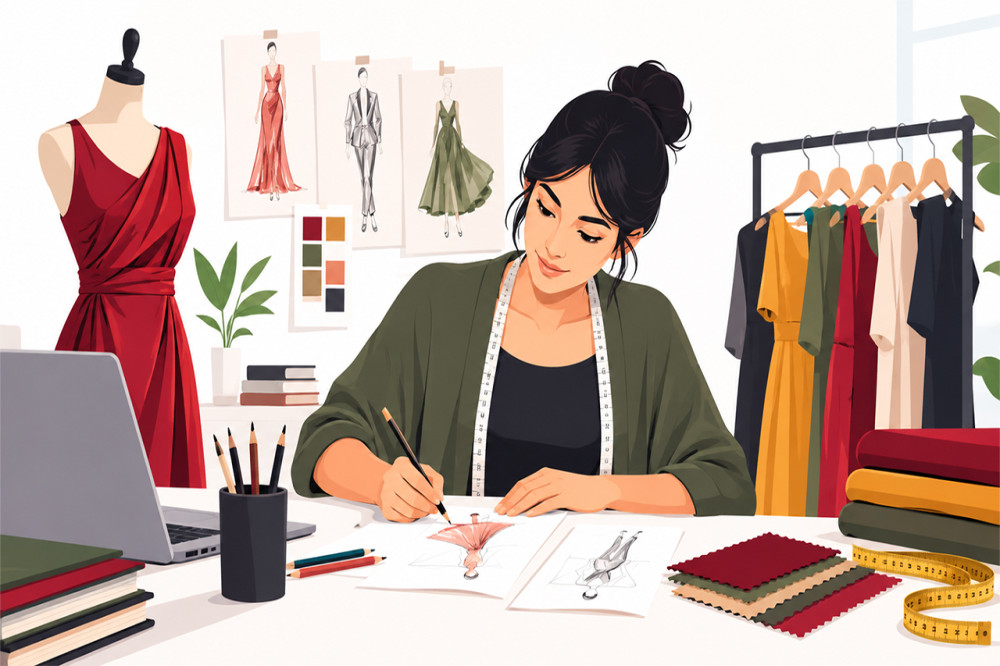
A designer’s work may include:
Depending on the role, a designer may focus on creative design, technical execution, business strategy, or market adaptation.
Fashion design offers multiple career branches, allowing students to choose paths based on strengths.
Apparel & Garment Designer
Designs everyday wear, ethnic wear, western wear, or fusion clothing for brands and labels.
Fashion Illustrator
Focuses on visual representation of fashion concepts through sketches and digital art.
Textile Designer
Works with fabrics, prints, weaves, dyeing techniques, and surface ornamentation.
Fashion Stylist
Styles models, actors, influencers, and campaigns for shoots, films, and brands.
Costume Designer
Creates outfits for films, OTT series, theatre, and television productions.
Fashion Merchandiser
Bridges design and business—handles pricing, sourcing, inventory, and sales strategy.
Sustainable Fashion Designer
Focuses on eco-friendly fabrics, ethical production, slow fashion, and circular design.
Fashion Entrepreneur
Builds personal labels, D2C brands, bridal studios, or export units.
Fashion also opens doors to allied roles such as:
Fashion designing offers structured academic routes, which parents often look for.
Undergraduate Options
Duration: 3–4 years
Eligibility: 10+2 from any stream (Arts, Science, Commerce)
Postgraduate Options
These programs combine:
Admissions typically involve:
Fashion design rewards skill development more than raw talent.
Core Skills
Technical Skills
Soft & Professional Skills
Fashion design earnings vary widely based on role, city, and experience.
Freelancers and entrepreneurs can earn more through:
Income grows with portfolio strength and market understanding, not just degrees.
Fashion is not disappearing—it is evolving.
Reasons this career has longevity:
Unlike narrow career paths, fashion design offers career mobility—designers can shift into teaching, business, consulting, or content creation over time.
Fashion rewards consistency, patience, and adaptability more than overnight success.
Fashion designing is not about glamour—it’s about process, persistence, and purpose.
Some designers create for runways.
Some design for everyday wardrobes.
Some build brands.
Some preserve crafts.
Some innovate with technology.
There is no single version of success in fashion.
At Career Map, we believe creative careers deserve the same clarity and respect as traditional ones. Fashion designing, when approached with the right skills and mindset, is not a fallback—it’s a profession with depth, dignity, and long-term relevance.
If you love observing the world, solving visual problems, and expressing ideas through design, fashion might not just be your interest—it might be your career, waiting to be shaped with intention.
Bibliography:
https://www.itm.edu/blog/fashion-designer-salary-in-india/
https://design.careers360.com/articles/fashion-designer-salary-in-india
https://www.pearlacademy.com/blog/fashion/fashion-design-salary-india-abroad
https://www.amordesign.org/blog/average-salary-of-a-fashion-designer-in-india-as-of-2025
https://www.seft.world/top-fashion-companies-hiring-designers-in-india/
https://www.pw.live/design-architecture/exams/fashion-designer-salary
https://www.shiksha.com/design/fashion-designing-career-chp
https://aaft.edu.in/blog/fashion-designer-salary-in-india
https://www.youtube.com/watch?v=SJXkHWGMOBI
https://aaft.com/blog/fashion-design/fashion-designing-career-options/
https://www.universalai.in/career-in-fashion-designing-a-creative-path-to-success/
https://www.pearlacademy.com/blog/fashion/what-is-fashion-designing-career-guide
https://sageuniversity.in/blogs/fashion-designing-course-career-guide


Hello !!
I'm a Career Bee