
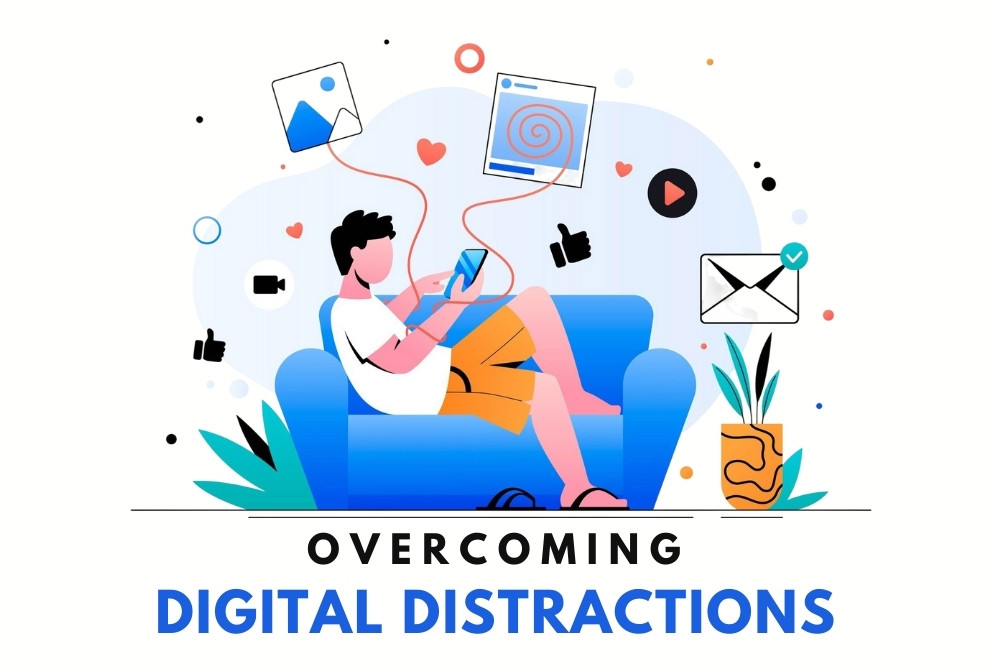
In today’s digital world, screens are everywhere — from smartphones and tablets to laptops and TVs. They help us connect, learn, and explore. However, they also do something far more subtle and dangerous: they quietly pull our attention away from the things that matter most. For students in Classes 9–12, a stage where decisions about careers, skills, and future pathways are essential, digital distractions can be the biggest barrier between potential and success.
At Career Map, Odisha’s leading career counselling organisation, we have seen hundreds of students lose focus, procrastinate on important tasks, and struggle with decision-making — all because they’re caught in the endless loop of digital engagement. The good news? This problem is solvable. But first, it’s important to understand what we’re dealing with.
The average teenager today spends over 2.2 hours a day (SOURCE) on their phone or digital devices, and that’s not even counting school-related work. Social media platforms, online games, video streaming apps, and even harmless notification pings constantly fight for their attention.
What starts as a “5-minute break” on Instagram often turns into 2 hours of scrolling. A quick YouTube video becomes an entire afternoon of binge-watching. Over time, this constant switching between apps and tasks trains the brain to seek quick dopamine hits, reducing its ability to focus deeply on anything, especially academic work or career planning.
At Career Map, we often remind students that being attentive is a skill. And like any skill, it needs consistent practice. If digital distractions are training your brain to be scattered, they’re also quietly shaping how you approach your future.
The consequences of unchecked digital habits extend far beyond poor study sessions. They shape how students think, plan, and prepare for the future. Here’s how:
1. Reduced Focus and Productivity
Every notification breaks the flow of concentration. This constant disruption not only slows down learning but also prevents students from engaging in “deep work” — focused, uninterrupted thinking that’s essential for mastering subjects, preparing for competitive exams, or developing skills.
Without focus, even the best career counselling cannot deliver results. That’s why we integrate time-management and focus-building strategies into our student guidance programs — because clarity of thought is the foundation of career success.
2. Decision Fatigue
Students today make thousands of small digital choices every day — what to watch, who to follow, what to comment on. These micro-decisions drain mental energy, leaving less capacity for big, important choices like selecting subjects, career streams, or college options.
We’ve seen this repeatedly in our counselling sessions: when the mind is cluttered, students delay or avoid crucial decisions. Our personalised counselling sessions help students cut through that noise and focus on what really matters — building a clear roadmap for their future.
3. Missed Opportunities for Skill-Building
Every hour spent scrolling is an hour not spent exploring real-world opportunities — internships, workshops, competitions, or even reading about new career trends. These experiences build confidence and shape career paths.
At Career Map, we encourage students to replace passive screen time with active skill-building. Whether it’s exploring trending careers, understanding their psychometric profiles, or developing essential soft skills, these are the activities that make students future-ready.
4. Emotional Impacts: Anxiety, FOMO, and Procrastination
Constant exposure to idealised lives online often leads to comparison, anxiety, and fear of missing out. These emotions push students into avoidance behaviours — procrastination, self-doubt, and even withdrawal from meaningful tasks.
Through our sessions, we teach students how to separate online illusions from real-world goals, and how emotional balance is key to long-term career planning.
Digital distraction isn’t always obvious, but the signs are. Look out for these indicators:
If you recognise two or more of these signs, it’s time to make changes. And the earlier these changes are made, the easier it is to build healthier habits.
Practical Strategies to Regain Control
Here’s the good news: digital distractions are not unbeatable. With the right techniques, students can reclaim their focus and parents can support them effectively.
1. Set Digital Boundaries
Designate specific hours for social media, entertainment, and gaming. Tools like app timers and screen-time trackers can help students stay accountable.
2. Practice Focus Windows
Try the “Pomodoro Technique”: 25 minutes of distraction-free study followed by a 5-minute break. Over time, this builds discipline and enhances concentration.
3. Turn Off Non-Essential Notifications
Most notifications don’t require immediate action. Disabling them reduces the urge to constantly check your phone.
4. Replace Screen Time With Productive Alternatives
Encourage activities that stimulate creativity and curiosity — reading, online courses, volunteering, or even exploring career options. At Career Map, we help students identify such activities aligned with their strengths and interests.
5. Use Screen Time for Skill-Building Instead of Scrolling
Not all screen time is harmful, it’s about how you use it. With the right mindset, technology can become a powerful tool for upskilling and career readiness. Here are a few impactful ways students can turn their screen time into learning time:
At Career Map, Odisha’s leading career counselling organisation, we encourage students to build these micro-skills early. They not only boost confidence but also make a student’s profile more impressive to universities and future employers.
6. Parents: Guide, Don’t Police
Strict bans often backfire. Instead, involve your child in setting digital rules, explain why focus matters, and connect it to their bigger career goals. Career Map’s counselling modules are designed to help families approach this collaboratively.
Learning to manage digital distractions isn’t just about improving grades — it’s about building life-long habits that support career growth. Students who master focus and discipline now will find it easier to tackle complex university courses, competitive exams, and professional challenges later.
That’s why we place a strong emphasis on focus training, self-awareness, and structured decision-making in all our counselling programs. With the right guidance, students can learn to control technology, not be controlled by it.
Every student deserves the chance to build a future based on their strengths, interests, and aspirations — not dictated by distractions. At Career Map, we combine psychometric assessments, expert one-on-one career counselling, and actionable career roadmaps to help students make confident, informed decisions.
If your child is losing focus or struggling to plan their future, now is the time to take action.
Book a personalised counselling session with Career Map today — and help them transform digital chaos into career clarity.
Final Thought: Technology isn’t the enemy, distraction is. Students who learn to manage their digital world today are the ones who will lead tomorrow. With structured support from Career Map, Odisha’s most trusted career counselling organisation, that journey becomes clearer, stronger, and more focused than ever.




Hello !!
I'm a Career Bee