The world of work is changing faster than ever before.
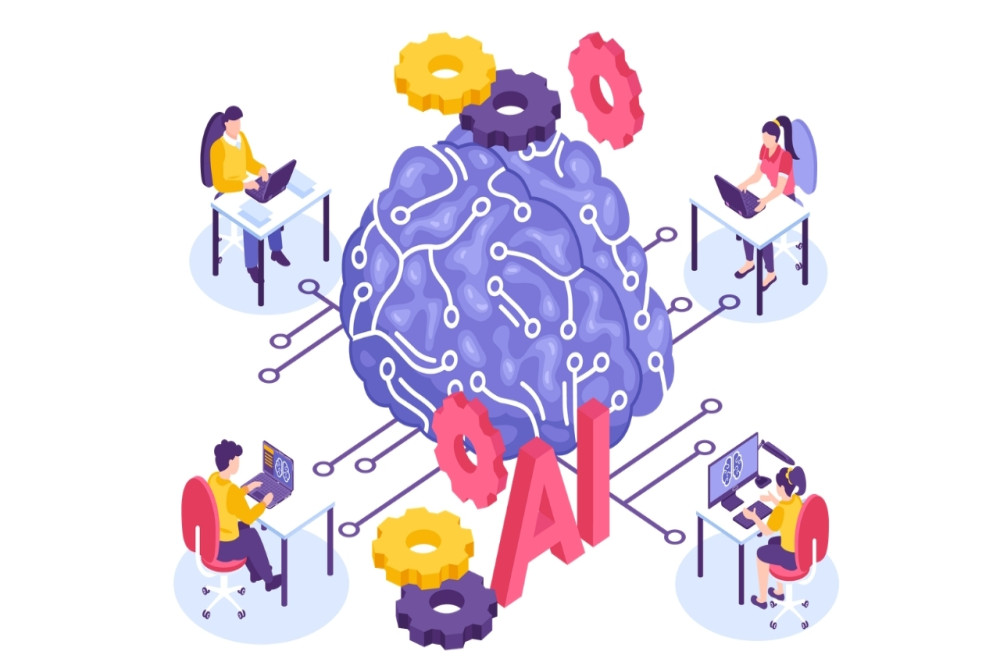
Artificial Intelligence is transforming industries.
Automation is replacing repetitive tasks.
New careers are emerging while existing roles are evolving.
This means that the future job market will demand much more than academic knowledge or technical qualifications.
According to global workforce reports, employers are increasingly looking for professionals who combine technological fluency with uniquely human skills—the ability to think critically, communicate effectively, solve problems, and adapt to constant change.
The important thing to understand is this:
By 2030, your employability will depend not only on what you know, but also on how quickly you can learn, adapt, and create value.
The workplace of 2030 will look very different from today's.
While technology will automate many routine tasks, employers will continue to value skills that machines cannot easily replace.
These include:
At the same time, digital and AI literacy will become essential across almost every profession.
Students who build a combination of technical knowledge and human skills will be better prepared for future careers.
Artificial Intelligence is no longer limited to the technology sector.
It is now being used in healthcare, education, finance, marketing, manufacturing, law, and even creative industries.
Students don't necessarily need to become programmers.
However, they should understand:
Professionals who know how to work with AI will have a significant advantage over those who ignore it.
Information is available everywhere. The real skill is knowing how to evaluate it, question it, and apply it effectively.
Employers value professionals who can:
As automation handles routine work, human judgment becomes even more valuable.
No matter which career you choose, communication will always matter.
Whether you're presenting ideas, working in teams, attending interviews, or leading projects, your ability to communicate effectively influences your success.
Strong communication includes:
Ideas create impact only when they are communicated clearly.
The most successful professionals of the future won't necessarily be the smartest.
They'll be the ones who never stop learning.
Industries are evolving rapidly.
New tools, technologies, and job roles continue to emerge every year.
Students who embrace lifelong learning will remain relevant throughout their careers.
Being adaptable means:
In the future, learning will become a career-long habit rather than a one-time achievement.
Technology can process data.
People understand emotions.
Emotional intelligence helps professionals:
As workplaces become more collaborative, emotional intelligence will continue to be a highly valued skill.
While AI can generate ideas, human creativity gives those ideas meaning and purpose.
Innovation is driven by people who ask better questions, think differently, and develop original solutions.
Creative professionals are needed across industries—not just in design or media.
Students who cultivate curiosity and creativity will be better equipped to solve tomorrow's challenges.
Modern workplaces depend on teamwork.
Employers want professionals who can collaborate across departments, cultures, and disciplines.
Strong leadership isn't only about managing people. It's about:
These qualities help students grow into future leaders.
Career success isn't just about earning money.
It's also about managing it wisely and identifying opportunities.
Students should develop an understanding of:
Even those who choose traditional careers benefit from thinking like problem-solvers and innovators.
Learning a skill is only the beginning.
Students must also develop the habit of applying those skills through real experiences.
Some practical ways to prepare include:
Practical experience transforms knowledge into confidence.
One of the biggest misconceptions students have is that learning ends after graduation.
The reality is quite different.
By 2030, professionals may need to update their skills multiple times throughout their careers as industries continue to evolve.
Those who embrace continuous learning will adapt more easily to change, seize new opportunities, and remain competitive in the job market.
The ability to learn may become the most valuable skill of all.
The careers of the future won't belong only to students with the highest marks or the most prestigious degrees.
They'll belong to those who are adaptable, curious, technologically confident, and willing to keep learning throughout life.
By developing a balance of digital skills, critical thinking, emotional intelligence, creativity, communication, and leadership, students can prepare themselves for careers that may not even exist today.
At Career Map, we believe future success is built through preparation, not prediction. By helping students identify their strengths and develop future-ready skills, we empower them to confidently navigate a rapidly changing world.
Because by 2030, employers won't simply ask,
"What qualification do you have?"
They'll ask,
"What problems can you solve, how quickly can you learn, and what value can you create?"
And the students who can answer those questions will shape the future.
BIBLIOGRAPHY
https://www.ekascloud.com/our-blog/futureproof-skills-every-student-must-learn/3769
https://cresmonde.com/top-10-skills-your-child-needs-in-2030-that-schools-must-teach-today/
https://nationalskillsnetwork.in/ai-computational-thinking-cbse-curriculum/



Hello !!
I'm a Career Bee